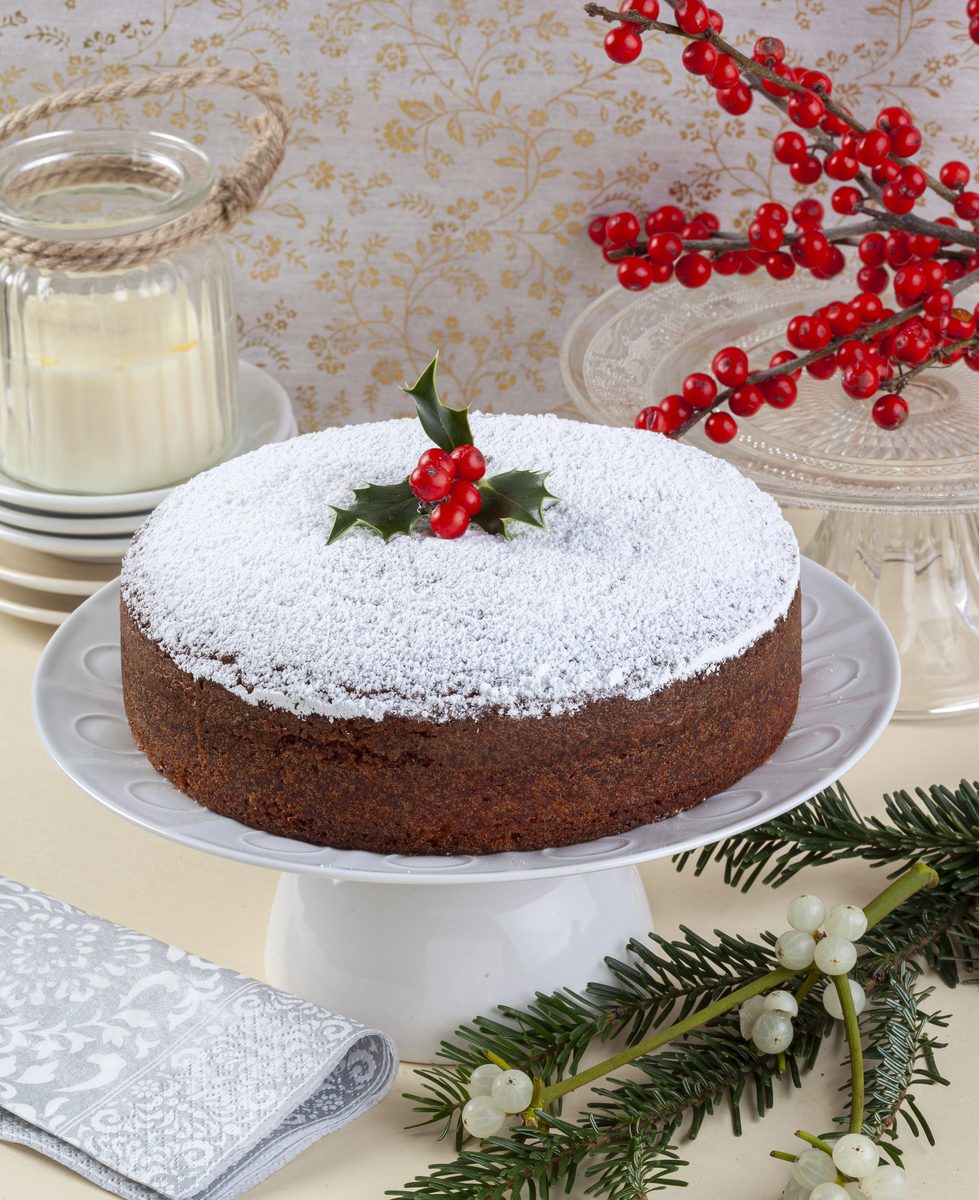
Vasilopita
New Year's cake with hidden coin- Yield
- 1 cake (about 16 servings)
- Active
- 30 minutes
- Total
- 1 1/2 hours
- Difficulty
- Easy
The story
Cut at the stroke of midnight on New Year's, vasilopita is a sweet cake named for Saint Basil of Caesarea. According to legend, the city, besieged by an enemy, called on its inhabitants to gather gold and jewelry for a ransom; when the enemy, moved by their generosity, dropped his demand without collecting, Saint Basil faced the task of returning the gathered treasure to its rightful owners with no records of any kind — so, the story goes, he kneaded all the gold into bread and handed it out to the townspeople, and each one miraculously received exactly his own share back. Today a coin is hidden in the batter, and the cake is cut in a strict order: first the sign of the cross with the knife, then pieces handed out from the oldest member of the family to the youngest, with extra pieces set aside for the household, for the poor, or for Saint Basil himself, depending on local custom. Whoever finds the coin has good luck for the whole year. For Greek families in the diaspora, cutting the vasilopita at midnight on New Year's is one of the most solemn and most exciting moments of the entire holiday season.
Ingredients and method
The full recipe, with US and metric measures and stand-ins for hard-to-find ingredients, is part of the Christmas edition. Buy it once and keep the PDF.
Want to try first? Melomakarona is free to cook.