Panettone
Panettone- Yield
- 1 tall loaf (about 12 servings)
- Active
- 1 hour
- Total
- About 6 hours, mostly rising
- Difficulty
- Medium
The story
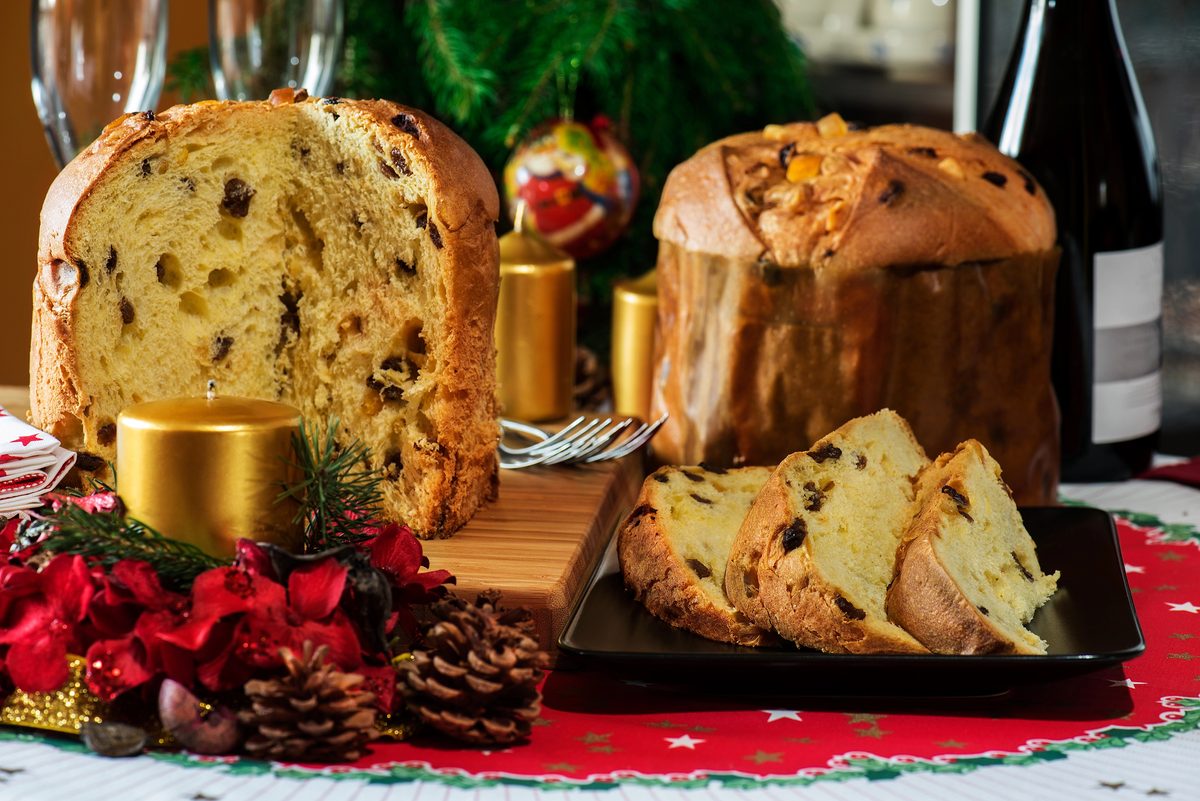
Panettone has at least two popular origin legends, and both involve love and kitchen improvisation. One tells of a young falconer, Ughetto, who fell in love with the daughter of a poor Milanese baker and, to save the family business, secretly added butter and sugar, then candied peel and raisins, to the plain bread dough. The loaf became so sought after that the parents finally consented to the marriage. The other sets the scene at the court of a 15th-century duke of Milan: when the cook burned the dessert he had prepared, a young helper named Toni hastily threw together a new cake from leftover dough and fruit, and the duke was delighted. Hence, supposedly, the name "pan de Toni," "Toni's bread." Whichever story is closer to the truth, the panettone we know today is far younger than those legends: for centuries it was a low, dense loaf, and its tall, domed, airy form came only around 1920 from the Milanese baker Angelo Motta. It is a yeast cake whose dough needs days of natural fermentation before baking, which is why even Italian families now mostly buy it from a trusted baker instead of making it themselves. A boxed panettone, given to a colleague or neighbor, is nearly as common a Christmas gesture in Italy as a greeting card.
Ingredients and method
The full recipe, with US and metric measures and stand-ins for hard-to-find ingredients, is part of the Christmas edition. Buy it once and keep the PDF.
Want to try first? Struffoli is free to cook.