Kokkina avga
Red Easter Eggs- Yield
- 12 eggs
- Active
- 25 minutes
- Total
- 3 3/4 hours, plus overnight in the dye
- Difficulty
- Easy
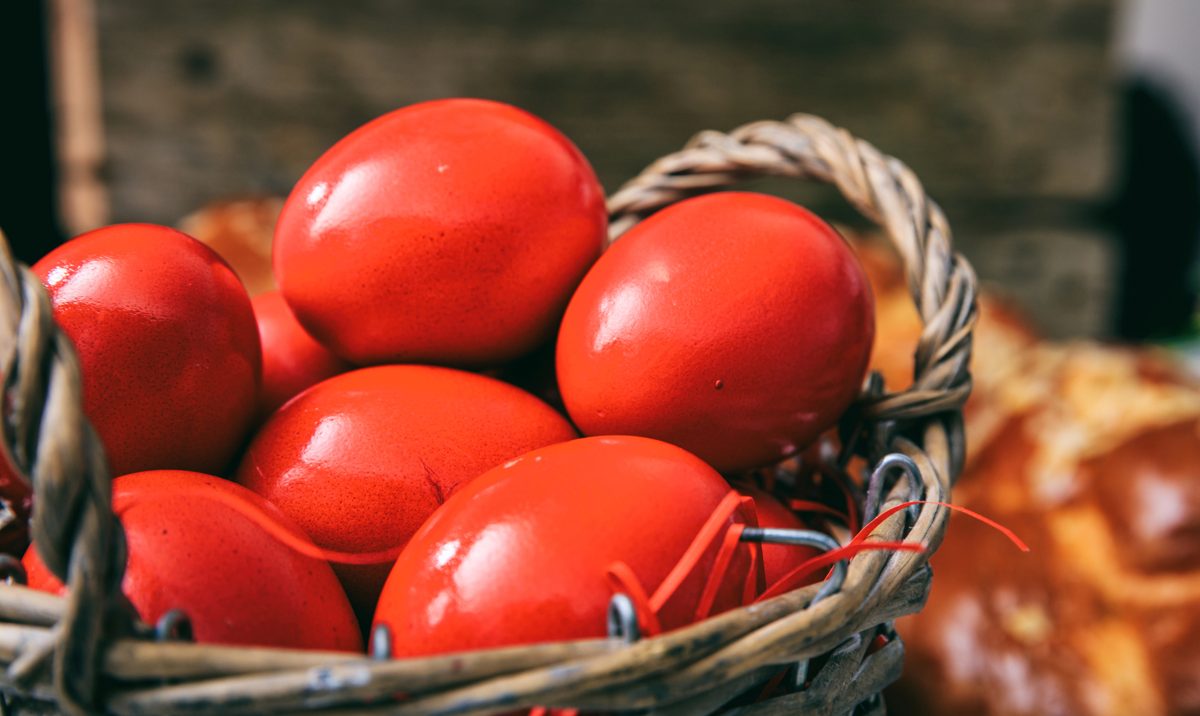
The story
Greek families dye their Easter eggs red on Holy Thursday, which falls on April 29, 2027, in the Orthodox calendar. The red stands for the blood of Christ and the egg for the sealed tomb; cracking the shell stands for the Resurrection. One story told among Eastern Christians credits Mary Magdalene, whose eggs are said to have turned red. The dyeing is often led by the matriarch of the family, with a packet of red dye or with onion skins, beets or berries, and the eggs are rubbed with olive oil to shine late on Thursday or early on Good Friday. Some are pressed into braided tsoureki; the rest wait untouched until the midnight Resurrection service on Holy Saturday. After that service, and again at the Easter Sunday table, people play tsougrisma. One player says "Christos anesti," Christ is risen, and taps the tip of an egg against an opponent's, who answers "Alithos anesti," truly he is risen. The player whose egg survives unbroken is said to have good luck for the year. Dye a dozen on Thursday and keep them cold until the game and the meal.
Ingredients and method
The full recipe, with US and metric measures and stand-ins for hard-to-find ingredients, is part of the Easter edition. Buy it once and keep the PDF.
Want to try first? Tsoureki is free to cook.