Flæskesteg
Roast pork with crackling- Yield
- Serves 6–8
- Active
- 20 minutes
- Total
- 3 hours, plus overnight drying
- Difficulty
- Medium
The story
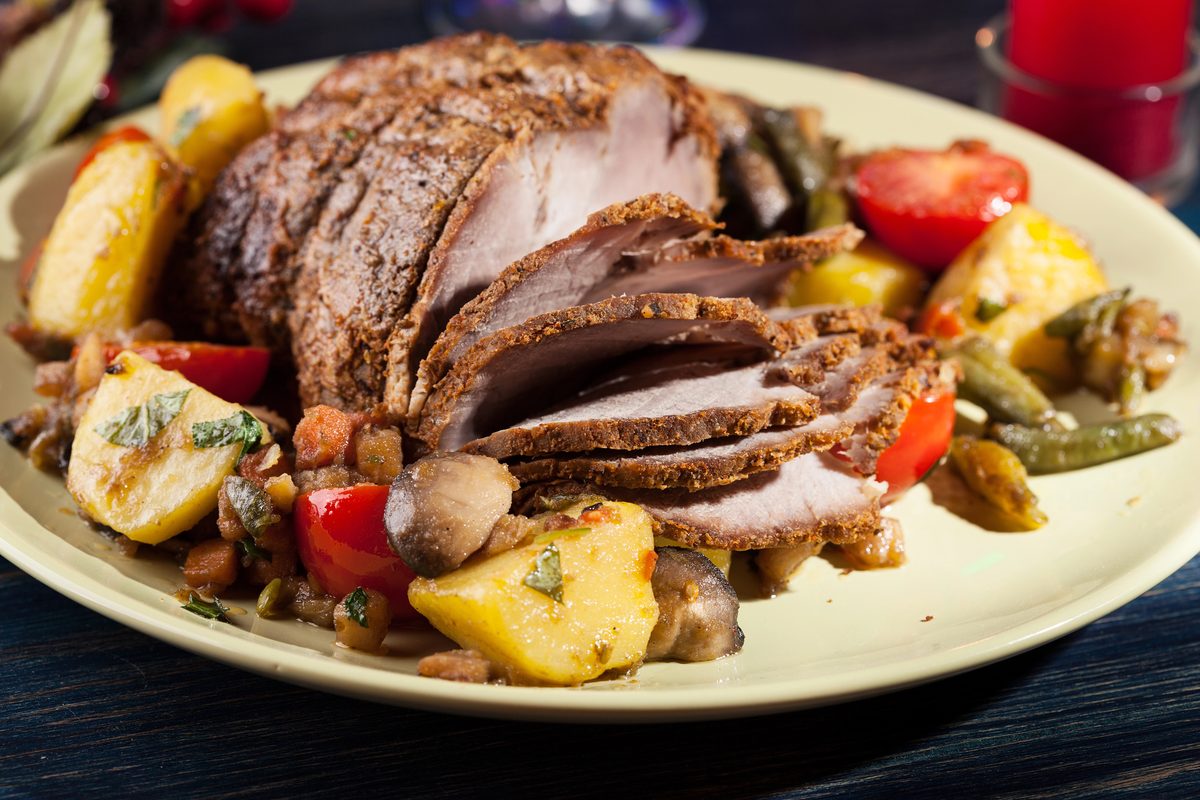
In Danish surveys, flæskesteg regularly comes out as one of the two most popular main courses of the Danish Christmas, right behind roast duck, with which it often shares the table. It is roast pork with the rind scored in neat lines and baked until crisp. The secret to good crackling, known as “svær” (rind), lies in salting the cuts ahead of time and roasting at a temperature high enough to turn each strip of rind into its own crisp little tile, one you can hear when the roast is carved. Many Danish families argue afresh every year over whether cloves belong in the scored rind (the older tradition) or not (the more modern approach), a small but emotionally charged detail on which generations can differ. The roast is served with boiled or caramelized potatoes and braised red cabbage. As with Norwegian ribbe, achieving perfect crackling is considered a true culinary test for the cook of the house before Christmas. For Danish American families, flæskesteg is often “the dish” that signals Christmas has arrived, even when everything else on the table has been adapted to local ingredients.
Ingredients and method
The full recipe, with US and metric measures and stand-ins for hard-to-find ingredients, is part of the Christmas edition. Buy it once and keep the PDF.
Want to try first? Pebernødder is free to cook.