Fabada asturiana
Asturian Bean Stew- Yield
- Serves 4 to 6
- Active
- 30 minutes
- Total
- 3 1/2 hours, plus overnight soaking
- Difficulty
- Easy
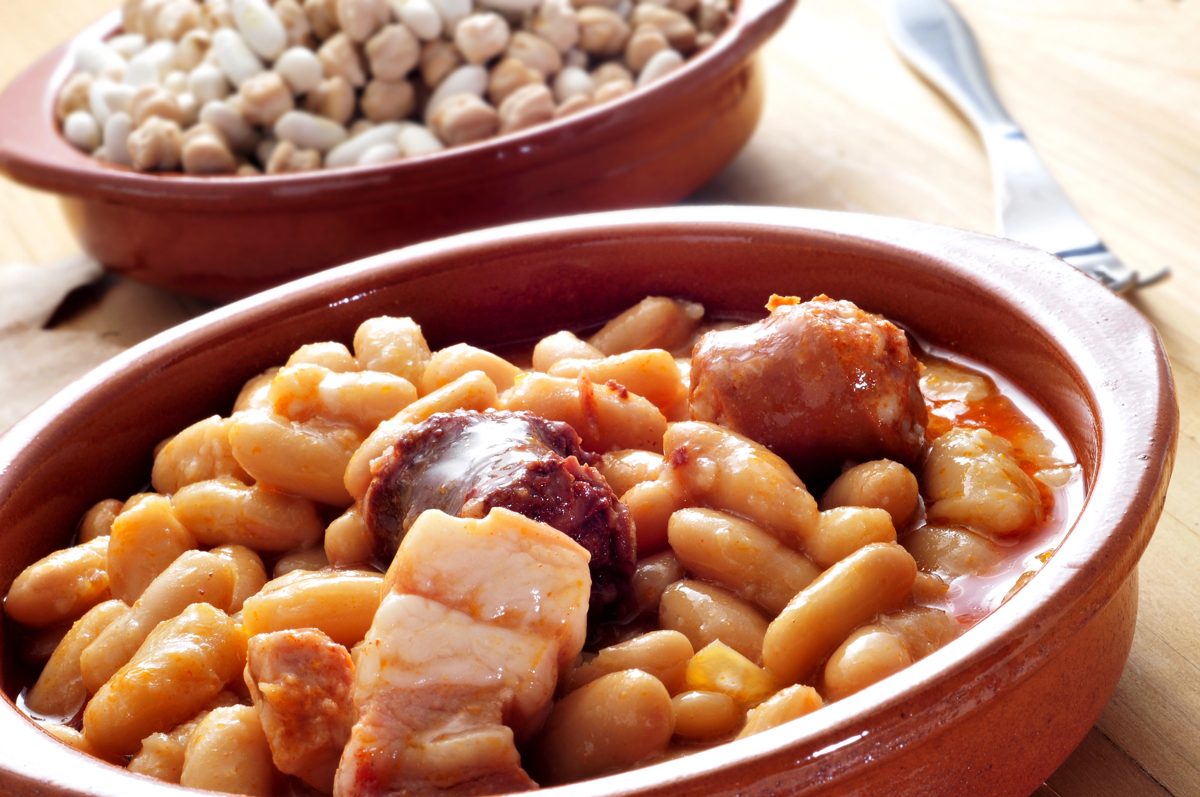
The story
Fabada is the dish most people outside Asturias connect with the region, and the regional website asturias.com calls it the most universal of Asturian dishes. Directo al Paladar ranks it among the three most popular dishes of the region, alongside arroz con leche and the breaded cachopo, and Explore Parts Unknown, publishing the recipe of the Asturian-born chef José Andrés, calls it a stew found in every Asturian home. The base is fabes, large, creamy white beans, ideally of the La Granja variety. The meats are called the compango, from a Latin word for companion: chorizo, morcilla, salted lacón and tocino. In western Asturias cooks consider the botillo sausage essential, while in the center and east it is practically unknown. The method asks for patience. Cooks bring the pot to a boil and then add a splash of cold water, a step called asustar les fabes, or scaring the beans, repeated as the pot cooks for about three hours, and they add salt only at the end. Fabada is especially popular in the colder months and is traditionally eaten with crusty bread and Asturian cider. Serve the beans in bowls and the sliced meats on a platter, as Asturian cooks do.
Ingredients and method
The full recipe, with US and metric measures and stand-ins for hard-to-find ingredients, is part of the Winter Folk Dishes edition. Buy it once and keep the PDF.
Want to try first? Berliner Pfannkuchen is free to cook.