Castagnaccio
Tuscan Chestnut Cake- Yield
- One 9-inch cake (8 pieces)
- Active
- 15 minutes
- Total
- 1 hour 15 minutes
- Difficulty
- Easy
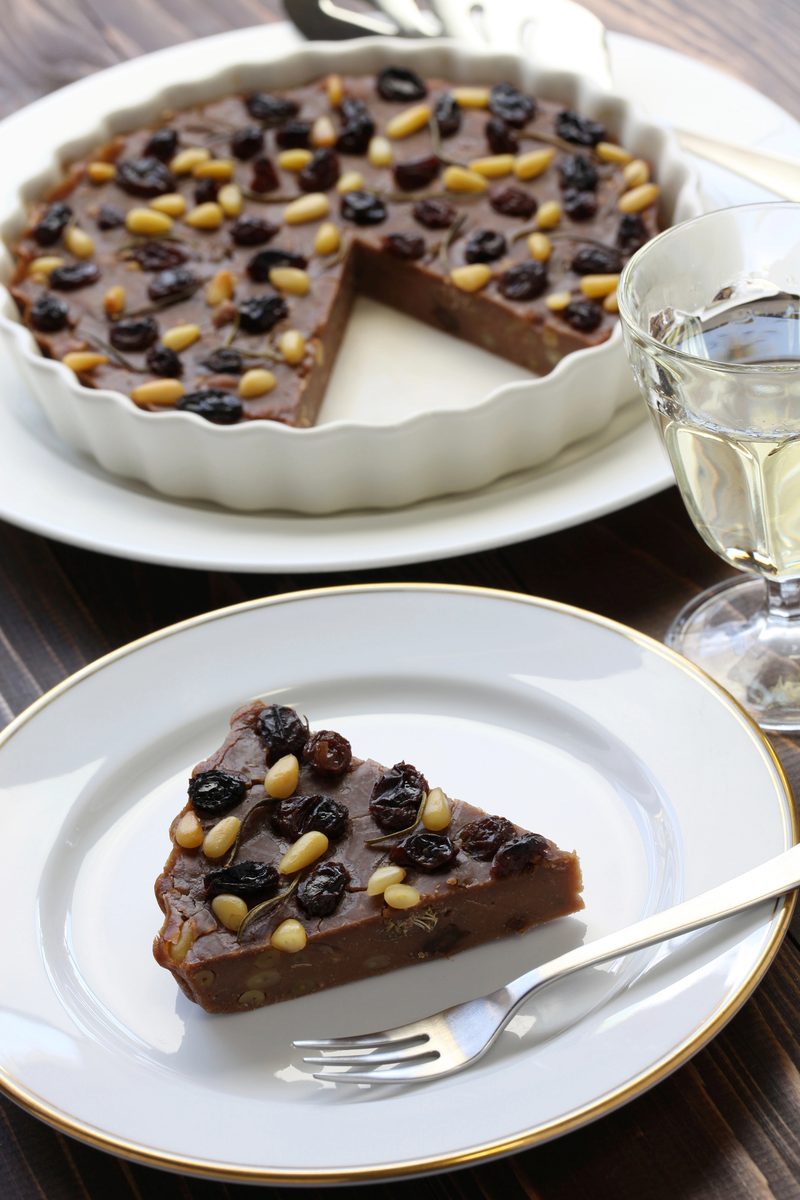
The story
Castagnaccio is a flat, unsweetened cake of chestnut flour, water and olive oil, studded with pine nuts, raisins and rosemary. It comes from the Apennine country between Tuscany and Emilia-Romagna, where chestnuts were once a staple food of rural communities, and people called it pane di legno, wooden bread, or pane dei poveri, bread of the poor. The humanist Ortensio Lando credited a man named Pilade from Lucca with inventing it in his Commentario of 1553. Pellegrino Artusi later included it in his cookbook as migliaccio di farina dolce, “commonly called castagnaccio.” The name changes from valley to valley: patona or castignà in Lunigiana, neccio in Lucca, migliaccio in Florence, and toppone for the thicker cake of Livorno. Chestnuts are gathered from late September to mid-November and dried, in areas such as the Garfagnana, Mugello and Amiata, and the new flour reaches shops from late November, which makes castagnaccio a cake of the cold months. After World War II it lost its place as an everyday sweet and is now sold mainly as a seasonal specialty. Serve it in thin wedges, warm or at room temperature, with a glass of vin santo.
Ingredients and method
The full recipe, with US and metric measures and stand-ins for hard-to-find ingredients, is part of the Winter Folk Dishes edition. Buy it once and keep the PDF.
Want to try first? Ribollita is free to cook.